Why Chimney Repointing Matters in Godalming
Godalming has more chimney stacks per property than most Surrey towns, thanks to its concentration of Victorian, Edwardian and pre-war housing. Every chimney is exposed to the full force of the weather — wind, rain, frost and thermal cycling — and the mortar joints bear the brunt. In the Wey Valley's persistently humid climate, mortar erosion is 20–30% faster than in drier parts of the county.
Lime Mortar vs Cement — Getting It Right
The most important decision in chimney repointing is mortar type. Modern cement mortar is appropriate for post-1920 brick chimneys. But for older chimneys — and particularly for Bargate stone chimneys around Charterhouse, Frith Hill and parts of the High Street — cement is actively harmful. Cement is harder than Bargate stone and traps moisture inside the masonry, causing spalling damage that is irreversible. We use NHL 3.5 or NHL 5 Natural Hydraulic Lime mortar on all pre-1920 and Bargate stone chimneys.
Flaunching
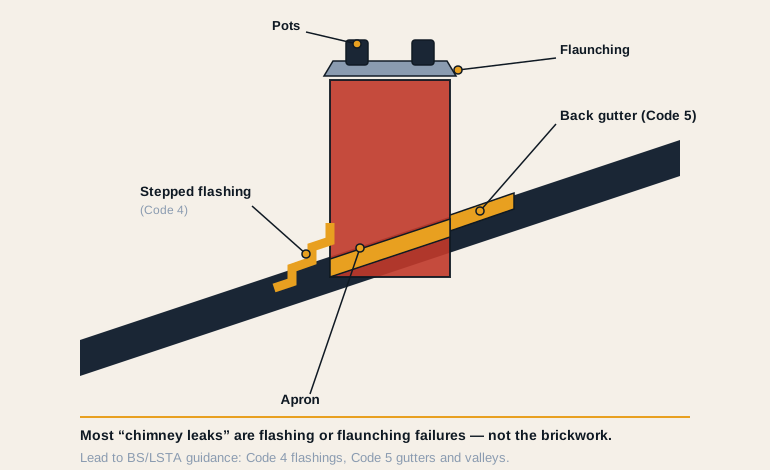
Flaunching is the mortar slope around the base of chimney pots. It sheds rainwater away from the pot opening and prevents water tracking down into the flue. Cracked flaunching is one of the most common causes of chimney damp — and one of the cheapest to repair. We reform flaunching in mortar matching the repointing specification.
Cowls and Capping
Unused flues should be capped or fitted with cowls to prevent rain entry while maintaining ventilation. A vented cap costs £80–£150 fitted. For chimneys no longer in use, capping eliminates ongoing maintenance costs while preserving the stack for aesthetic and structural purposes — important in the Conservation Area where chimney removal may need consent.
Bargate Stone — Godalming's Specialist Challenge
Bargate stone chimneys are unique to the Godalming area. The warm honey-coloured sandstone was quarried locally until World War II and is a defining architectural feature. We regularly repair damage caused by previous incorrect cement repointing — cutting out the cement, cleaning joints, and repointing in lime mortar that allows the stone to breathe. This specialist work costs more than standard repointing but prevents the irreversible destruction of irreplaceable stone.